La Recherche pour tous
La connaissance n’a pas de prix et doit être accessible librement. Toutefois, le grand public a rarement l’occasion de questionner les résultats issus de la recherche, de demander des précisions, de pouvoir exprimer sa critique à l’égard de ces travaux.
Face à ce problème, nous avons imaginé un journal pluridisciplinaire dans lequel des chercheur.e.s pourraient publier leurs articles dans une version « vulgarisée », en accès libre. Ces articles vulgarisés seraient ensuite validés après un travail de relecture de collégien.ne.s, et/ou lycéen.ne.s mis.e.s en contact avec le.la chercheur.e.
Et ce journal, comme nous étions motivé.e.s, nous l’avons créé.
Un journal pour tous
Que tu sois élève, enseignant.e ou encore chercheur.e, tu peux jouer un rôle dans la diffusion de la connaissance ! Pour en savoir plus, rends-toi vite dans la section qui te concerne !
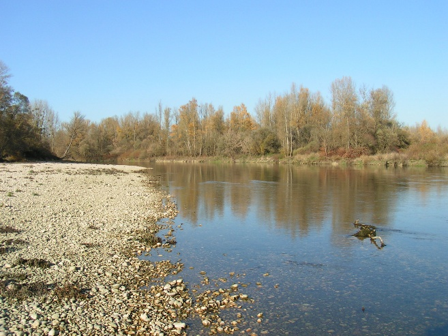
How to identify and monitor the response of forests near riverbanks to drought: use of aerial thermal imagery and on-field measurements
Forests near riverbanks, also known as alluvial forests, are sensitive to drought caused by climate change and worsened by changes in river flow. Being able to find and map this sensitivity is important to understand the effects of climate change and change how we man-age these forests. In this study, we tested if thermal infrared images, measuring tree tempera-ture, taken at different spatial scales could be used to diagnose the health of the forest during drought.
In the summer of 2022, we collected leaves and bark from black poplar trees at two sites with different levels of connection to groundwater along the Ain River in France. These samples were analysed to study the seasonality of water stress and to check whether the stress was visible on the thermal infrared images.
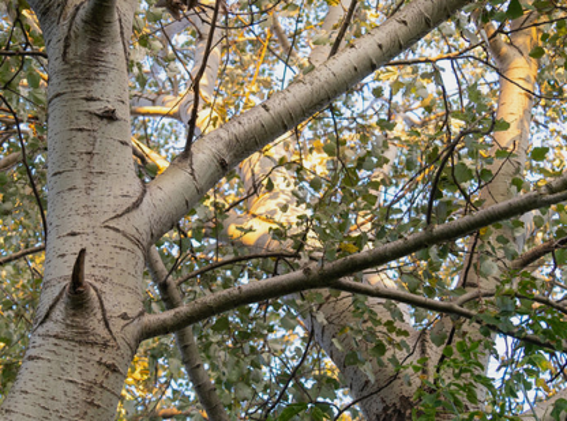
« La cigale et la fourmi » chez les peupliers : comment gérer ses ressources en eau lors d’une sécheresse
À cause du changement climatique, les sécheresses deviennent de plus en plus fré-quentes et intenses. Nous cherchons donc à comprendre comment les arbres réagissent au manque d’eau. Dans cette étude, on s’intéresse au peuplier blanc (Populus alba), une espèce très présente le long du Rhône.
Comme dans la fable de La Cigale et la Fourmi, les arbres n’adoptent pas tous la même stratégie face à la sécheresse. Certains économisent rapidement l’eau en fermant leurs stomates, tandis que d’autres continuent à fonctionner malgré le stress hydrique. Pour étudier ces comportements, on utilise plusieurs types de méthodes : des mesures réalisées directe-ment sur les arbres, des images satellites permettant de suivre l’état de la végétation et des images thermiques montrant les variations de température du feuillage.
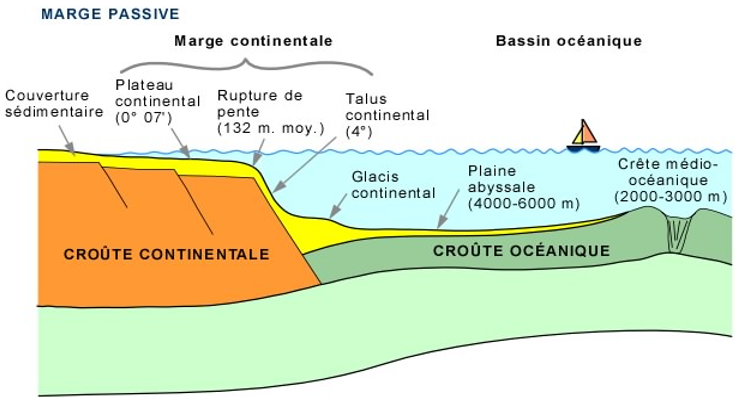
La mer Noire : l’évolution d’un lac d’eau douce en une mer d’eau salée provoque la fonte d’hydrates de gaz.
Le méthane est un gaz à effet de serre qui peut se trouver dans la nature sous forme de bulles ou dissoute dans l’eau ou l’air mais aussi sous la forme solide appelée hydrates de gaz*. Cette forme est peu connue, elle ressemble à de la glace et s’observe seulement dans les sols gelés, permafrost, et sur les fonds marins à grande profondeur d’eau (très forte pression) et faible température (mais supérieure à 0). Nous nous intéressons ici aux hydrates présents dans les sédiments marins le long des marges continentales.
Read moreIls nous font confiance !